
P0351: Ignition Coil A Primary/Secondary Circuit Malfunction

Decode the P0351 Ignition Coil A fault. Learn its meaning, symptoms, and causes like failed coils or bad wiring. Master the DIY diagnosis, including the coil swap test, to avoid costly PCM replacements and restore engine performance efficiently.


Quick Answer
P0351 means the PCM detected a malfunction in the Ignition Coil “A” primary/secondary circuit—typically the coil-on-plug (or coil pack channel) labeled Coil A, which is usually cylinder 1. It is an electrical/circuit code, not a vague “engine bad” message. The most common causes are a failed Coil A, a damaged connector/pins, or a wiring open/short on that coil’s control, power, or ground path. A shorted or fouled spark plug on that cylinder can also contribute on the secondary side. Diagnose in order: scan and note companion codes → inspect Coil A connector and harness → coil swap / circuit check → inspect the spark plug → only then consider PCM driver faults. Do not replace the PCM first.
Safety / accuracy note: Ignition systems produce high voltage. Work with the engine off when handling coils and plugs; keep clear of moving belts and hot exhaust. Coil lettering (A/B/C…) and cylinder numbering are vehicle-specific—COP labeling and firing order can differ from “Coil A = cylinder 1.” Confirm with your service information. A flashing check engine light under load means an active misfire—reduce throttle and avoid prolonged driving that can overheat the catalytic converter. This guide is general education, not a substitute for professional diagnosis.
If your scanner shows a P0351 code, you are looking at an ignition coil circuit fault for Coil A—not a random misfire mega-guide. Search intent is practical: what P0351 means, how it differs from P0301, what symptoms and causes to expect, the DIY diagnose order (including the coil swap test), when to replace the coil versus wiring versus the PCM, and a realistic Estimated repair cost range.
What Does the P0351 Code Mean?
P0351 is a generic OBD-II powertrain code. The SAE-style definition is Ignition Coil “A” Primary/Secondary Circuit (wording varies slightly by manufacturer). In plain English: the PCM commands Coil A and monitors the electrical behavior of that coil circuit. If the expected primary voltage spike, current, or circuit integrity is out of range—open, short, weak spike, or control-side fault—it stores P0351 and turns on the check engine light.
Primary vs secondary, briefly: the primary side is the low-voltage circuit (power, ground, and PCM driver/control). The secondary side is the high-voltage path to the spark plug. Many PCM strategies watch the primary reaction when the coil is triggered; a shorted secondary can weaken that reaction and still set a coil-circuit code. That is why a bad plug, cracked boot, or oil-filled plug well can matter even when the code sounds “electrical.”
Cylinder mapping (evidence-safe): on most vehicles, Coil A corresponds to cylinder 1, and P0352–P0358 follow Coil B–H for later cylinders. Always verify against your year/make/model service data—coil pack labeling, bank layout, and COP letter stamps are not universal. For category context, see the OBD2 Codes List.
What Are the Symptoms of a P0351 Code?
Realistic P0351 symptoms track a one-coil / one-cylinder ignition problem. Some vehicles show only the light; others misfire hard under load.
| Symptom | How common with P0351 | Notes |
|---|---|---|
| Check engine light (steady or flashing) | Almost always | Flashing = active misfire—treat as urgent |
| Rough idle / shake at stops | Common | One cylinder not contributing evenly |
| Hesitation or stumble on acceleration | Common | Load raises voltage demand on the coil |
| Companion misfire code (often P0301) | Common | P0351 is circuit; P0301 is misfire detection |
| Poor fuel economy / raw fuel smell | Possible | Unburned fuel from a dead cylinder |
| Hard start or intermittent cutout | Possible | Heat-soak coil failures often act “after warm-up” |
For a broader symptom checklist that is not P0351-specific, see Bad Ignition Coil Symptoms. Keep this page focused on Coil A circuit diagnosis.
What Causes a P0351 Ignition Coil A Circuit Fault?
Rank causes by likelihood so you do not start with the rarest (PCM) first:
| Cause | Likelihood | What to check |
|---|---|---|
| Failed Ignition Coil A (open/short/internal insulation failure) | Most common | Coil swap test; visual cracks, carbon tracking, burnt smell |
| Loose, corroded, or damaged coil connector / pins | Common | Broken lock tab, green corrosion, oil/water in plug |
| Wiring open/short on Coil A power, ground, or control circuit | Common | Chafing near valve cover, rodent damage, melted insulation |
| Fouled, cracked, or over-gapped spark plug / damaged boot (secondary side) | Common contributor | Inspect plug and boot; worn plugs can overwork coils—see how failing plugs kill coils |
| Oil or coolant in the spark-plug well | Possible | Fix valve-cover gasket / leak source before installing a new coil |
| PCM coil driver / control module fault | Rare | Only after coil, connector, wiring, and plug check good |
Important: P0351 is not automatically “buy a new coil and done.” A connector that was never fully seated, or a harness rubbed through on the valve cover edge, will kill a new coil’s reputation fast. Diagnose before parts shotgun.
P0351 vs P0301: What’s the Difference?
These codes often appear together, but they answer different questions:
| Code | What the PCM detected | What it suggests | First DIY move |
|---|---|---|---|
| P0351 | Ignition Coil A primary/secondary circuit fault | Coil, connector, wiring, plug/boot secondary issue, or (rare) PCM driver | Inspect Coil A circuit → coil swap test |
| P0301 | Cylinder 1 misfire detected | Spark, fuel, compression, air, or sensor issue on cylinder 1 | Prove spark (coil/plug), then fuel/compression |
| Both together | Circuit fault + confirmed misfire on that cylinder | Strong ignition-side lead—still verify connector/wiring | Treat Coil A path first; do not skip inspection |
If you only have P0301, do not assume the coil is dead—use the swap test and plug inspection. If you only have P0351 with little drivability change, still inspect the circuit; intermittent opens set codes before they strand you.
Can I Drive with a P0351 Code?
Short answer: many vehicles still move with a lone P0351, but it is not a “drive for weeks” code.
- A dead or weak Coil A cylinder dumps unburned fuel into the exhaust. Prolonged misfire can overheat and damage the catalytic converter.
- A flashing CEL under acceleration means stop the hard driving and diagnose soon.
- Rough running reduces power and can make merging or hills unsafe.
- Intermittent heat-related coil faults may clear temporarily after cooldown—do not treat that as a fix.
Fix the root cause, clear the code with a quality OBD2 scanner, and confirm the light stays off through a proper road test.
How to Diagnose P0351 Step by Step
Use this DIY order so you do not replace Coil A for a chewed wire—or a PCM for a bad connector:
| Step | Action | Decision |
|---|---|---|
| 1. Scan | Record P0351, pending/stored status, freeze frame, and companion codes (P0301, other P035x, catalyst codes) | Multiple P035x → think shared power/ground or PCM later; single P0351 → focus Coil A path |
| 2. Inspect | Coil A body, boot, connector lock, pins, harness near valve cover; look for oil/water in the plug well | Visible damage or contamination → repair that before guessing the coil |
| 3. Coil swap test | Move Coil A to another cylinder; clear codes; road-test; re-scan | Code moves with coil (e.g., to P0352) → coil is bad. Code stays on original circuit → wiring/connector/PCM path |
| 4. Spark plug check | Remove and inspect the plug under Coil A (gap, cracks, fouling, oil) | Bad plug → replace; do not install a new coil on a destroyed plug |
| 5. Circuit checks | Verify power, ground, and control continuity per wiring diagram; wiggle-test for intermittents | Open/short found → repair harness; then retest |
| 6. PCM last | Only if coil, plug, connector, and wiring test good and the fault stays on that cylinder circuit | Shop-level driver/scope diagnosis; do not “try a used PCM” as step one |
Need more detail on home testing methods (swap, visual, basic resistance limits)? Use How to Test an Ignition Coil at Home—then come back here for P0351-specific code logic. Resistance specs are vehicle-specific; a coil can pass a cold ohm check and still fail hot under load.
Coil Swap Test—How to Read the Result for P0351
- P0351 moves with the coil (new code on the cylinder where you moved it): replace that coil. Inspect the original plug before install.
- P0351 stays on Coil A’s original circuit after a known-good coil is installed there: chase connector pins, wiring, power/ground, then PCM driver.
- Misfire code moves but no new P035x: still treat the moved coil as highly suspect; confirm with a second road cycle and freeze frame.
How to Fix P0351 — Coil vs Wiring vs PCM
Match the repair to what the tests proved:
- Replace Ignition Coil A when the swap test follows the coil, or the coil shows clear physical failure. Use correct COP/coil-pack fitment. Apply dielectric grease lightly in the boot if the manufacturer recommends it—do not pack the electrical connector full of grease.
- Replace or service the spark plug on that cylinder when fouled, cracked, over-gapped, or oil-soaked. On high-mileage engines, replacing the full plug set (or a matched coil-and-plug refresh) often prevents the next cylinder from repeating the same failure pattern. See coil or spark plug?
- Repair wiring / connector when the code stays on the original cylinder with a known-good coil. Fix the root (chafe point, water intrusion, broken lock) or the new coil will fail the same way.
- PCM / driver repair only after circuit integrity is proven. This is rare and usually shop territory (scope, pin-fit, programming where required).
After the repair: clear P0351, road-test under the same load conditions that set the freeze frame, and re-scan. Confirm no return of P0351 or P0301.
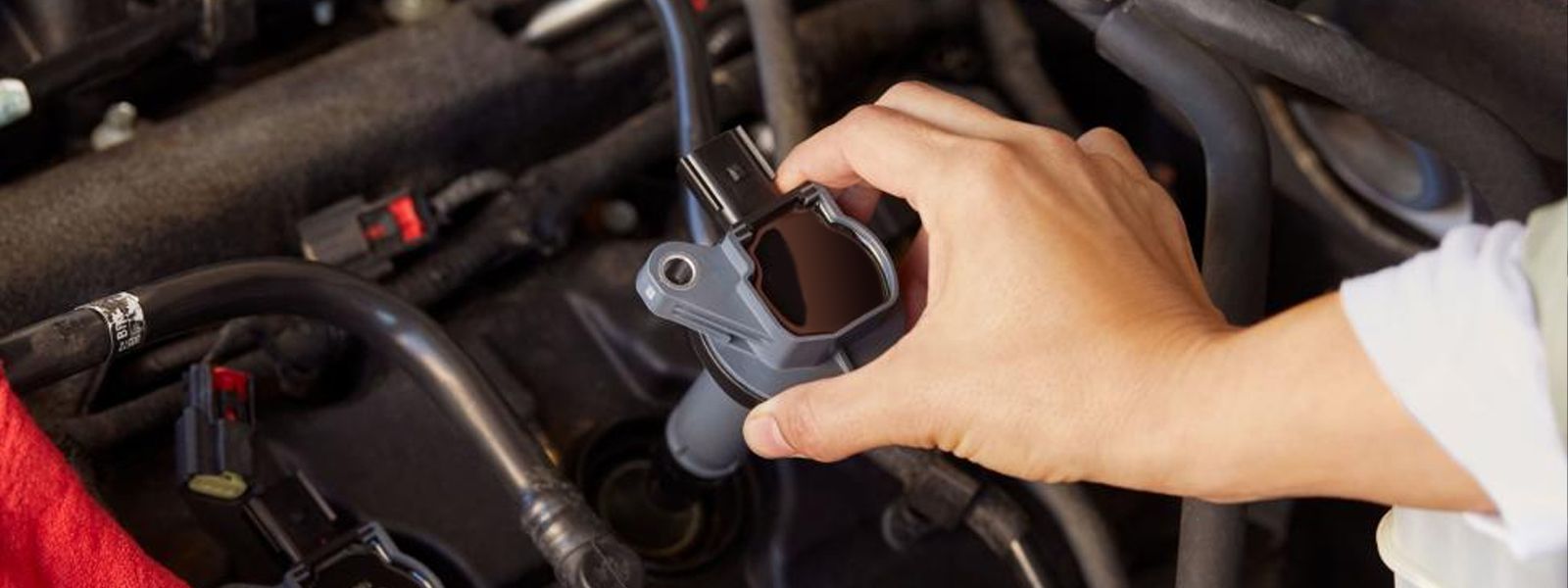
How Much Does It Cost to Fix Code P0351?
P0351 repair cost depends on whether you are replacing a coil, repairing a harness, or (rarely) addressing a PCM. Treat the dollar ranges below as Estimated planning figures—not Measured quotes for your vehicle.
| Repair | Typical DIY parts range (Estimated) | Shop total range (Estimated) |
|---|---|---|
| Replace Coil A (single COP) | Often about $30–$120 per coil (varies widely by vehicle) | Often about $150–$400 parts + labor for one coil |
| Spark plug(s) with the coil job | Often about $8–$25 per plug (set pricing depends on count/type) | Often bundled; access time dominates labor |
| Connector / wiring repair | Low parts cost if pigtail is simple | Can exceed a simple coil job if harness repair is deep |
| PCM replacement / programming | Rare path | Significantly higher; confirm all circuit tests first |
Labor access (tight engine covers, transverse V6 back-bank coils, seized plugs) moves the total more than the part sticker. Get a vehicle-specific estimate after diagnosis—not before.
Shop What the Swap Test Named—Not a Parts Guess
Once Coil A (or the plug under it) fails the DIY checks, fitment matters more than “any coil that looks similar.” Use vehicle year/make/model on A-Premium, confirm connector style and coil type, then order the part your tests support.
- Swap test followed Coil A: start with a direct-fit ignition coil.
- Plug fouled, worn, or damaged: replace with the correct spark plug specification.
- High-mileage coil + plugs due: consider an ignition coils & spark plugs kit so you are not installing a fresh coil on a set of plugs that will overwork it again.
- Home page / fitment hub: A-Premium vehicle selector.
Ignition Coils Coil & Plug Kits Spark Plugs
Final Takeaway
P0351 is a focused Ignition Coil A circuit code—usually cylinder 1, verify for your vehicle. Scan and note companions, inspect the connector and harness, run the coil swap test, check the spark plug, then chase wiring. Leave the PCM for last.
FAQs
What does P0351 mean in simple terms?
It means the computer sees a problem in Ignition Coil A’s electrical circuit—primary (low-voltage control/power) and/or secondary (spark side). Coil A is typically cylinder 1, but confirm for your vehicle.
Is P0351 always a bad ignition coil?
No. The coil is a common cause, but a damaged connector, open/shorted wiring, a bad spark plug/boot, oil in the plug well, or (rarely) a PCM driver can set the same code. Use inspection and the coil swap test before you buy parts.
Is P0351 the same as P0301?
No. P0301 reports that cylinder 1 is misfiring. P0351 reports a Coil A circuit fault. They often appear together when spark is the problem, but P0301 alone can also be fuel, compression, or air-related.
How do I do a coil swap test for P0351?
Move Coil A to another cylinder, clear codes, drive, and re-scan. If the coil-circuit code follows the coil, replace the coil. If P0351 returns on the original circuit with a known-good coil installed there, diagnose wiring/connector next. More methods: how to test an ignition coil at home.
Can a bad spark plug cause P0351?
Yes, especially if the plug is shorted, cracked, or severely fouled—the secondary fault can affect the primary spike the PCM monitors. Worn plugs can also overwork coils over time. Inspect the plug under Coil A before closing the job.
Can I clear P0351 without fixing it?
You can clear the code, but it will typically return if the circuit fault remains. Clearing without repair also resets readiness monitors needed for many emissions tests and does nothing for an active misfire risk to the catalytic converter.
When should I replace the PCM for P0351?
Almost never as a first step. Replace or repair the PCM only after Coil A, the spark plug, the connector, and the wiring all test good and the fault remains on that cylinder’s control circuit—preferably confirmed with professional circuit testing.
Should I replace all ignition coils when I have P0351?
Not automatically. Prove Coil A first. Replacing a full set (or a coil-and-plug kit) is a maintenance choice on high-mileage engines where other coils are aged—not a requirement of the P0351 definition itself.


